

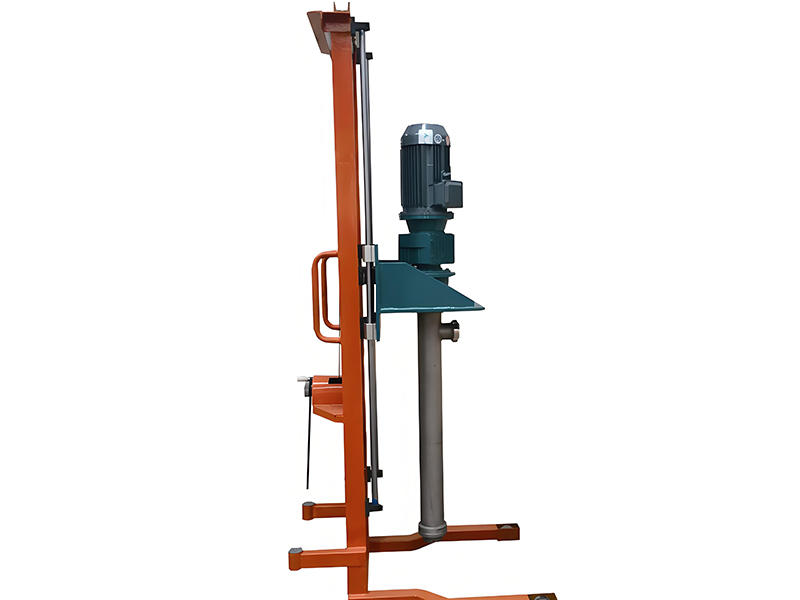
Everything You Need to Know About Screw Pump Rotors
Screw pump rotors are the core rotating elements that make screw pumps efficient, reliable, and suitable for demanding industrial applications. Understanding screw pump rotor design, materials, performance, and maintenance is essential for engineers, maintenance specialists, and plant operators who work with positive displacement pumps on a daily basis.
This in?depth guide explains what screw pump rotors are, how they work, the most common rotor types, key design parameters, and how to select, operate, and maintain them for long service life and high reliability.
A screw pump rotor is the helical rotating component inside a screw pump that displaces fluid from the suction side to the discharge side. As the rotor turns, it traps discrete volumes of liquid and moves them continuously along the pump axis, delivering a smooth, pulsation?free flow.
Screw pump rotors are found in:
Progressive cavity pumps (single screw pumps)
Twin screw pumps (two intermeshing screws)
Triple screw pumps (three meshing screws)
Multi screw pumps (two, three, or four screws)
The geometry, material, surface finish, and manufacturing accuracy of the rotor directly determine pump efficiency, pressure capability, volumetric accuracy, noise level, and wear resistance.
Screw pumps are positive displacement pumps. Their rotors do not impart high velocity to the fluid like centrifugal impellers. Instead, they create sealed cavities that move fluid steadily along the rotor axis.
The rotor (or rotors) rotate inside a precisely matched housing, barrel, or stator.
Helical cavities form between the rotor profile and the stationary components.
At the suction side, these cavities open and fill with fluid due to pressure differential.
As rotation continues, the cavities progress axially, carrying the trapped fluid forward.
At the discharge side, the cavities decrease in volume and release the pressurized fluid.
Because the cavities move continuously and overlap, the flow is nearly pulsation?free and very stable, even at low speeds.
| Pump Type |
|---|
| Rotor Arrangement |
|---|
| Fluid Displacement Principle |
|---|
| Typical Applications |
|---|
| Progressive cavity (single screw) |
| Single helical rotor inside an elastomeric or metallic stator |
| Rotor precesses within stator, forming progressive cavities that move from suction to discharge |
| Sludges, slurries, viscous fluids, shear?sensitive media |
| Twin screw pump |
| Two intermeshing, timed screws rotating in a close?fitting casing |
| Multiple sealed chambers between screws and casing convey fluid axially |
| Crude oil, multiphase fluids, tank stripping, loading/unloading |
| Triple screw pump |
| One driving screw and two idler screws in a precision?bored housing |
| Hydrodynamic sealing and axial movement of fluid through screw channels |
| Lubricating oil, hydraulic oil, fuel oil, low to medium viscosity fluids |
| Four or multi screw pumps |
| Two pairs of intermeshing screws (or more), often hydraulically balanced |
| Multiple parallel flow paths for high flow and relatively high pressure |
| Pipeline transport, process fluids, high?capacity transfer |
Screw pump rotors vary by pump concept, thread geometry, and application. The most common categories are outlined below.
Also known as single screw pump rotors, these components operate with an internal helical stator. Key characteristics include:
Rotor shape: single external helix with large pitch and typically circular cross section
Number of starts: usually single?start or double?start profiles
Stator interaction: rotor runs eccentrically inside an elastomer?lined stator, forming sealed cavities
Flow characteristics: very low pulsation, capable of handling very high viscosity and high solids content
Progressive cavity rotors are widely used in wastewater treatment, food and beverage processes, oil and gas, and chemical dosing where gentle handling and precise metering are important.
Twin screw pump rotors consist of two intermeshing screws, usually driven via timing gears. Features include:
Non?contacting operation: properly timed rotors do not touch each other, minimizing wear
Dry running tolerance: better tolerance to short periods of dry running compared with other screw concepts
Bidirectional flow: capable of reversing flow by reversing rotation
Wide viscosity range: can handle very low to very high viscosities in one pump
Rotor profiles in twin screw pumps can be either symmetrical or asymmetrical, optimized for efficiency, suction characteristics, and low noise.
Triple screw pump rotors include one central driving screw coupled to two idler screws. The fluid is trapped in the screw flanks and carried axially.
Hydrodynamic sealing: minimal internal leakage due to tight clearances
High pressure capability: often used for high pressure lubrication systems
Quiet operation: low noise and low pulsation at high speeds
Self?priming: like other screw pumps, triple screw pumps can self?prime
These rotors are most common in clean, lubricating fluids such as lube oil, fuel oil, and hydraulic oil for power generation, marine, and industrial equipment.
Beyond two and three screw configurations, some high?capacity pumps utilize four or more screws. Custom screw pump rotors may feature:
Variable pitch along the rotor length
Special thread profiles (e.g., trapezoidal, modified involute)
Optimized root and flank geometry for specific viscosities
Engineered surface treatments or coatings for corrosion and wear resistance
The unique geometry and operating principle of screw pump rotors offer several benefits compared with other positive displacement and dynamic pump types.
Smooth, pulse?free flow: multiple overlapping cavities create continuous flow ideal for process control and metering.
Excellent suction capability: screw pump rotors can handle low NPSH conditions and difficult suction situations.
Wide viscosity range: from thin hydrocarbons to heavy bitumen and sludge.
Low shear pumping: gentle on shear?sensitive products like emulsions, food products, and polymers.
Self?priming ability: reliable start?up even when suction line is not flooded.
Compact design: high power density and small footprint in many configurations.
High efficiency at variable pressures: efficiency remains relatively stable across a range of discharge pressures.
Low vibration and noise: balanced rotor systems and smooth flow reduce mechanical stress.
Long service life: robust rotors, especially in lubricated services, can operate reliably for long intervals between overhauls.
Bidirectional operation: many screw pumps can reverse direction simply by reversing motor rotation.
Screw pump rotor materials must resist wear, corrosion, and fatigue while maintaining precise clearances and surface finishes. Material selection is driven by the pumped media, temperature, pressure, and expected lifetime.
| Material |
|---|
| Typical Grades / Variants |
|---|
| Main Strengths |
|---|
| Common Limitations |
|---|
| Typical Applications |
|---|
| Carbon steel |
| C45, 1045, 42CrMo4, AISI 4140 |
| High strength, cost?effective, good machinability |
| Limited corrosion resistance, not ideal for aggressive chemicals |
| Lube oil, hydraulic oil, clean non?corrosive fluids |
| Stainless steel |
| AISI 304, 316, 316L, 410, 420 |
| Good corrosion resistance, hygienic options for food and pharma |
| Higher cost; some grades less wear resistant without hardening |
| Food & beverage, chemicals, mildly corrosive media |
| Duplex / super duplex stainless |
| UNS S31803, S32750 |
| Excellent corrosion and pitting resistance, good strength |
| More complex welding and machining; higher cost |
| Offshore, seawater contact, aggressive brines |
| Tool and alloy steels |
| D2, H13, nitriding steels |
| High hardness, excellent wear resistance when heat treated |
| Requires precise heat treatment; may need corrosion protection |
| Abrasive slurries, high pressure, high load services |
| Nickel?based alloys |
| Inconel, Hastelloy, Monel |
| Outstanding corrosion resistance at high temperatures |
| Very high material and machining costs |
| Severe chemical services, high temperature corrosive fluids |
| Coated steels |
| Hard chrome, HVOF carbide, ceramic coatings |
| High surface hardness, improved wear and corrosion resistance |
| Coating integrity must be maintained; risk of spalling if misapplied |
| Abrasive media, extended service life requirements |
For progressive cavity pumps, the rotor works in combination with an elastomeric or metallic stator. Common stator elastomers include nitrile rubber (NBR), EPDM, FKM (fluoroelastomers), and specialty compounds. Matching rotor and stator materials must consider:
Chemical compatibility with the pumped media
Temperature limits of elastomers
Abrasive content and expected wear rates
Required operating pressure and speed
Designing a screw pump rotor involves optimizing geometry for volumetric efficiency, mechanical strength, manufacturability, and application?specific requirements.
Outer diameter (OD): dictates displacement per revolution and torque requirements.
Pitch: axial distance per helix revolution; influences flow capacity and pressure build?up.
Lead: for multi?start screws, lead is the axial advance per full rotation; lead = pitch × number of starts.
Number of starts: number of helices around the shaft; more starts can increase flow for a given diameter.
Root diameter: diameter at the base of the thread; affects mechanical strength and stiffness.
Clearances between screw pump rotors and the surrounding casing or stator are crucial for both efficiency and reliability.
Radial clearance: between rotor OD and housing bore or stator surface.
Axial clearance: at ends of rotors relative to end plates or covers.
Inter?rotor clearance: between meshing screws (for twin and triple screw designs).
Too tight a clearance increases friction, risk of contact, and heat generation. Too loose a clearance increases internal slip, reducing volumetric efficiency and pressure capability. Precision machining and consistent thermal expansion behavior are essential.
Rotor surface finish influences wear, friction, and sealing quality.
Surface roughness (Ra): typically in the range of 0.1–0.8 μm for metallic rotors in clean service.
Hardness: often increased via through?hardening, case hardening, nitriding, or surface coatings.
Corrosion protection: selected based on fluid composition, temperature, and required lifetime.
Rotor specifications vary widely by manufacturer and pump type, but several key parameters are common to most screw pump configurations.
| Parameter |
|---|
| Description |
|---|
| Typical Range (Indicative) |
|---|
| Rotor outer diameter |
| Maximum external diameter of the screw rotor |
| 10 mm to 400+ mm |
| Effective length |
| Pumping section length excluding shaft extensions |
| 100 mm to > 3000 mm |
| Number of screws |
| Count of intermeshing rotors per pump |
| 1, 2, 3, or 4 |
| Number of starts |
| Helical threads per rotor |
| 1 to 4 (application dependent) |
| Pitch |
| Axial distance between consecutive threads |
| Equal to or multiple of rotor diameter in many designs |
| Design pressure |
| Maximum pump discharge pressure rating |
| Up to 100 bar or more, depending on design |
| Operating temperature |
| Permissible fluid temperature range |
| -40 °C to +350 °C (with suitable materials) |
| Viscosity range |
| Usable kinematic viscosity of the fluid |
| 0.5 cSt to > 1,000,000 cSt (depending on pump type) |
| Rotational speed |
| Nominal rotor speed range |
| 10 to 6000 rpm (type and application specific) |
| Surface hardness |
| Hardness value at rotor surface |
| 180 to > 60 HRC equivalent |
The following table illustrates indicative relationships between rotor size and operating limits for progressive cavity rotors. Actual values depend on exact pump design and manufacturer.
| Rotor Size Class |
|---|
| Nominal Rotor OD |
|---|
| Typical Flow Range |
|---|
| Max Differential Pressure |
|---|
| Recommended Speed Range |
|---|
| Small |
| 10–40 mm |
| 0.1–10 m3/h |
| 6–12 bar per stage |
| 200–1000 rpm |
| Medium |
| 40–120 mm |
| 5–150 m3/h |
| 6–12 bar per stage |
| 100–600 rpm |
| Large |
| 120–300+ mm |
| 100–400+ m3/h |
| 6–12 bar per stage |
| 50–300 rpm |
Screw pump rotors are used wherever reliable, continuous positive displacement of liquids is required. Various industries depend on screw pump technology for both process and utility services.
Crude oil transport and boosting
Multiphase mixed oil, gas, and water handling
Produced water transfer
Refinery feed and product transfer (diesel, fuel oil, lube oil)
Lubrication oil circulation systems
Fuel oil supply and transfer
Hydraulic systems and turbine control oil
Marine propulsion lubrication and fuel transfer
Viscous chemicals and polymers
Resins, adhesives, and sealants
Solvents, intermediates, and final products
Corrosive and hazardous fluids (with appropriate materials)
Chocolate, syrup, and sugar solutions
Dairy products and viscous food ingredients
Cosmetics, creams, and gels
Pharmaceutical ingredients and finished products
Sludge transfer and dewatering feed
Thickened sludge and slurry handling
Chemical dosing and polymer make?up systems
Selecting the right screw pump rotor involves balancing hydraulic performance, material compatibility, mechanical constraints, and lifecycle cost. When specifying a rotor or replacement rotor, consider the following factors.
Viscosity: strongly affects required rotor geometry, speed, and clearances.
Solids content: influences wear resistance, clearance, and material choices.
Chemical composition: drives selection of corrosion resistant rotor materials.
Temperature: affects material strength, thermal expansion, and elastomer compatibility.
Required flow rate and acceptable flow pulsation
Discharge pressure and suction conditions (NPSH)
Viscosity variation during operation (start?up vs operating temperature)
Available installation space and allowable rotor length
Drive speed and power availability
Desired maintenance intervals and accessibility
Base rotor material (carbon steel, stainless steel, alloy steel, or exotic alloys)
Need for hardening or surface coatings to manage abrasion or corrosion
Compatibility with stator or housing materials to avoid galling or galvanic corrosion
The reliability and efficiency of a screw pump is highly dependent on the accuracy and quality of the rotor manufacturing process. Typical steps include:
Rough machining of bar or forging stock to required blank dimensions.
Precision thread milling, whirling, or grinding to create helical geometry.
Turning and grinding of journals, drive ends, and sealing surfaces.
Through hardening or case hardening (carburizing, nitriding, induction hardening) to achieve desired core strength and surface hardness.
Application of surface coatings such as hard chrome, HVOF spray coatings, or thermal spray ceramics when required.
Stress relieving and straightening operations to maintain tight runout tolerances.
Dimensional checks of thread geometry, pitch, diameter, and clearances.
Runout and balance verification for high speed rotors.
Surface roughness and hardness testing.
Non?destructive testing (NDT) such as magnetic particle or dye penetrant inspection for critical applications.
Proper installation of screw pump rotors is essential for long?term performance. Several guidelines help ensure successful commissioning.
Protect rotor surfaces from impact and corrosion during transport and storage.
Store horizontally and adequately supported to prevent bending of long rotors.
Apply suitable corrosion inhibitors or protective coatings on machined surfaces.
Follow correct orientation and timing marks, especially for twin and triple screw rotors.
Ensure axial positioning according to manufacturer’s instructions.
Align pump and driver to minimize shaft misalignment and bearing load.
Prime the pump or ensure adequate liquid is present before start?up.
Verify correct rotation direction relative to rotor design.
Gradually increase speed and pressure while monitoring vibration, temperature, and power draw.
Check for abnormal noise or contact between rotor and housing or stator.
Regular maintenance and inspection greatly extend the service life of screw pump rotors. Maintenance strategies depend on the pump type and operating environment.
Monitor pump vibration and noise for changes that may indicate rotor wear or imbalance.
Check pump discharge pressure and flow for signs of internal leakage or performance loss.
Inspect seals and bearings that support and seal the rotor.
Inspection frequency is influenced by operating hours, fluid abrasiveness, and process criticality. As a guideline:
Clean, lubricating services: inspect annually or as part of major equipment overhauls.
Moderately abrasive or viscous fluids: inspect every 6–12 months.
Highly abrasive slurries: more frequent inspection, potentially every 3–6 months.
Typical wear on screw pump rotors includes:
Flank and root erosion due to abrasives in the fluid.
Corrosion pitting from aggressive chemicals or inadequate material selection.
Scoring or galling from metal?to?metal contact caused by misalignment or inadequate lubrication.
Coating wear or flaking where coated rotors are used.
Minor wear can sometimes be addressed by polishing or re?coating the rotor surface.
Severe wear may require rotor replacement, including matching to a new stator for progressive cavity pumps.
Balance should be checked and corrected after any significant repair or machining work.
Understanding common failure modes helps diagnose and prevent rotor?related pump problems.
| Symptom |
|---|
| Possible Rotor?Related Causes |
|---|
| Corrective Actions |
|---|
| Reduced flow at constant speed |
| Increased internal leakage due to rotor wear; enlarged clearances; damaged stator in progressive cavity pumps |
| Inspect rotor and stator; measure clearances; repair or replace worn components |
| Cannot reach design discharge pressure |
| Worn rotor flanks or roots; erosion; lack of rotor stiffness causing deflection at high pressure |
| Evaluate wear patterns; check rotor material; consider higher hardness or upgraded material |
| Erratic flow or pressure pulsation |
| Rotor damage, partial blockage, or stator deformation |
| Inspect internal components; clean, repair, or replace as needed |
| Symptom |
|---|
| Possible Rotor?Related Causes |
|---|
| Corrective Actions |
|---|
| Unusual mechanical noise |
| Rotor contact with housing or stator due to misalignment, thermal expansion, or bearing wear |
| Check alignment, bearing condition, clearances, and thermal expansion allowances |
| Increased vibration at specific speeds |
| Rotor imbalance; distortion; buildup on rotor surface |
| Clean rotor; verify straightness; rebalance or replace |
| Periodic knocking or rattling |
| Improper timing of multiple screws; backlash issues |
| Verify gear timing; inspect keys and couplings; reset according to specifications |
Possible causes: running dry, high differential pressure, inadequate lubrication, or too tight clearances.
Actions: verify process conditions, ensure proper priming, adjust relief valve settings, and confirm rotor clearances and material suitability.
Adopting proven operating and maintenance practices helps maximize screw pump rotor life and performance.
Select rotor materials and coatings specifically for the pumped media and operating conditions.
Avoid extended dry running, especially in progressive cavity and triple screw designs.
Install adequate suction conditioning (strainers, filters, air elimination) where appropriate.
Monitor process variables and vibration to detect early signs of abnormal wear or operating issues.
Follow recommended start?up and shutdown procedures to reduce thermal and mechanical shocks.
A screw pump rotor is a helical, positive displacement component that moves discrete cavities of liquid along the pump axis. An impeller is a rotating element in a centrifugal pump that imparts velocity to the liquid and converts kinetic energy to pressure. Screw pump rotors provide nearly constant flow regardless of discharge pressure, while impellers exhibit strong performance dependence on system head.
Service life can range from several months in highly abrasive or severe duty services to many years in clean, lubricating oil applications. Rotor life depends on fluid characteristics, material selection, operating pressure, speed, and maintenance practices.
In many cases, yes. Reconditioning options include polishing, regrinding, rebalancing, and applying new surface coatings. However, if wear has significantly changed the rotor geometry or compromised structural integrity, replacement is usually the more reliable option.
Typical signs include loss of capacity, inability to reach design pressure, increased slip, abnormal vibration, and visible wear or scoring on rotor flanks and roots. Regular inspection and performance trending help determine when to repair or replace the rotor.
Yes, retrofits often involve upgrading rotor materials or coatings to improve wear or corrosion resistance. Any material change must, however, be compatible with the pump housing, stator, seals, and process fluid, and maintain appropriate thermal expansion and clearance characteristics.
In many applications involving lubricating fluids, the pumped media itself lubricates the rotor?to?housing clearances. For non?lubricating or abrasive fluids, careful material selection, speed limitation, and sometimes external lubrication of bearings and seals are required.
Screw pump rotors are fundamental components that determine the performance, reliability, and efficiency of screw pumps. Their helical geometry enables smooth, low?pulsation flow across a wide viscosity range, making screw pumps ideal for challenging industrial applications.
By understanding rotor types, materials, design parameters, installation practices, and maintenance needs, engineers and operators can select and operate screw pump rotors that deliver long?term, cost?effective service in demanding environments.
```

Copyright ? Jiangsu Longjie Pump Manufacturing Co., Ltd.



 Phone
Phone
Comment
(0)