

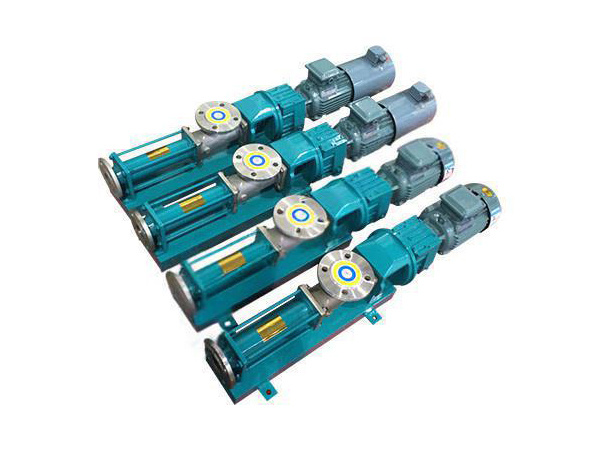
Stainless steel screw pumps are widely used in modern industry for handling viscous, abrasive, and hygienic fluids. This in-depth guide explains what stainless steel screw pumps are, how they work, their advantages, and the most common applications across different sectors such as food and beverage, chemical, pharmaceutical, wastewater, and oil and gas.
A stainless steel screw pump is a positive displacement pump that uses one or more helical screws to move fluid along the pump axis. The wet-end components in contact with the medium are manufactured from stainless steel, providing excellent resistance to corrosion, contamination, and high temperatures.
In many industries, the term “stainless steel screw pump” can refer to:
Because of the stainless steel construction, these pumps are especially popular where product purity, corrosion resistance, or frequent cleaning is required, such as in food processing, pharmaceuticals, and chemical transfer.
Several stainless steel alloys are commonly used in screw pump construction. The most typical grades include:
| Stainless Steel Grade | Key Properties | Typical Applications |
|---|---|---|
| 304 / 1.4301 | Good corrosion resistance, cost-effective, suitable for many non-chloride media | General industrial fluids, non-aggressive food & beverage products |
| 316 / 1.4401 | Enhanced corrosion resistance with molybdenum, better resistance to chlorides | Chemical transfer, marine environments, aggressive cleaning agents |
| 316L / 1.4404 | Low carbon version of 316, improved weldability, reduced risk of sensitization | Hygienic and sanitary systems, pharmaceutical systems |
| 904L / 1.4539 | High alloy, very high corrosion resistance, resistant to many acids | Special chemical processes, strong acids, highly corrosive media |
| Duplex Stainless Steels | High strength, excellent resistance to stress corrosion cracking | High-pressure systems, offshore oil & gas, seawater applications |
Screw pumps are positive displacement pumps. They transport liquid by trapping it in cavities formed between the rotating screw(s) and the pump casing, and then moving it axially from the suction side to the discharge side.
In a progressive cavity stainless steel screw pump, a single metal rotor (usually stainless steel) rotates eccentrically inside an elastomer stator. The combination of rotor and stator creates progressive, sealed cavities that move the liquid smoothly towards the outlet.
Multi-screw pumps use meshing screws rotating in opposite directions. Fluid is trapped in the spaces between the screw threads and the pump housing and carried from the inlet to the outlet.
The flow rate of a screw pump is primarily determined by screw geometry and pump speed, while the developed pressure is a function of system resistance and clearances within the pump.
| Parameter | Single-Screw Pump | Multi-Screw Pump |
|---|---|---|
| Flow Range | From a few L/h up to several hundred m3/h | Up to several thousand m3/h depending on size |
| Maximum Differential Pressure | Typically up to 24 bar; special designs higher | Can exceed 100 bar in high-pressure designs |
| Viscosity Range | From water-like up to >1,000,000 cP | From low to high viscosity, often up to ~100,000 cP |
| Flow Pulsation | Very low pulsation | Very low pulsation |
| Typical Speed | Low to medium rpm, depending on wear and shear limits | Medium to high rpm for compact design and high capacity |
Stainless steel screw pumps combine the mechanical advantages of screw pumping technology with the material benefits of stainless steel. This combination provides several strong advantages in industrial applications.
Stainless steel offers excellent resistance to many chemicals, cleaning agents, and process conditions. This makes stainless steel screw pumps suitable for:
Polished stainless steel surfaces and sanitary design options such as tri-clamp connections, drainable casings, and clean internal geometries minimize product retention and contamination risk. This is vital in food, beverage, dairy, brewing, biotechnology, and pharmaceutical applications.
Screw pumps deliver a continuous, non-pulsating flow with low shear forces. This helps to protect sensitive products including:
Stainless steel screw pumps can handle a broad range of fluid viscosities from thin solvents to highly viscous pastes and sludges. Many designs can also manage suspended solids, fibrous materials, and abrasive slurries.
Due to the positive displacement design, flow is largely independent of discharge pressure. Stainless steel screw pumps provide stable, predictable flow, which is especially important for dosing, metering, and process control applications.
The combination of robust stainless steel construction, carefully selected wear materials, and precise tolerances leads to long service life and high operational reliability when properly sized and maintained.
Stainless steel screw pumps serve in a broad spectrum of industries. The following sections describe common applications and typical pumped fluids for each sector.
The food and beverage industry is one of the largest users of stainless steel screw pumps due to strict hygiene requirements and the need to handle viscous, particulate-laden, and shear-sensitive products.
| Application Area | Typical Medium | Key Pump Requirements |
|---|---|---|
| Dairy Processing | Milk, cream, yogurt, curd, whey concentrate | Sanitary stainless steel, CIP/SIP capability, gentle handling, low pulsation |
| Brewing & Beverage | Wort, beer, wine must, syrups | Flavor-neutral materials, precise dosing, temperature resistance |
| Confectionery | Chocolate, caramel, sugar syrups | High-viscosity handling, temperature control, abrasion resistance (sugar crystals) |
| Sauce & Puree Transfer | Tomato paste, fruit purees, soups, sauces | Handling of particulates, low shear, simple cleaning |
| Oils & Fats | Vegetable oils, animal fats, shortenings | Viscosity tolerance, heating jackets (if needed), stainless steel wetted parts |
Stainless steel screw pumps are widely used in pharmaceutical and biotechnology processes, where sterility, product integrity, and accurate flow control are essential.
| Process | Medium | Design Considerations |
|---|---|---|
| Ointment & Cream Production | Highly viscous ointments, creams, gels | Low shear to protect structure, precise metering, minimal dead zones |
| Biotechnology Fermentation | Culture media, cell suspensions, fermentation broths | Gentle handling of cells, aseptic connections, CIP/SIP |
| API Transfer | Active pharmaceutical ingredient suspensions | High chemical resistance, traceability of materials, hygienic design |
| Cleaning & Sanitizing | CIP solutions, disinfectants, WFI | High temperature and chemical resistance, crevice-free design |
The chemical industry often uses stainless steel screw pumps for corrosive, viscous, and hazardous fluids. The corrosion-resistant properties of stainless steel are particularly important where aggressive chemicals and solvents are handled.
| Segment | Medium Type | Pump Requirements |
|---|---|---|
| Polymer & Resin Production | Viscous polymers, prepolymers, resins | High-temperature operation, high viscosity capability, abrasion resistance |
| Paints & Coatings | Pigmented paints, inks, coatings | Handling solids and pigments, compatibility with solvents, low pulsation |
| Specialty Chemicals | Additives, catalysts, surfactants | Precise dosing, corrosion resistance, explosion-proof drives as needed |
| Acid & Alkali Transfer | Dilute acids, caustic solutions | Material selection based on pH, concentration, and temperature |
While traditional screw pumps in oil and gas may be constructed from carbon steel, stainless steel screw pumps are increasingly used where corrosion or sour service is a concern, or where cleanliness and compatibility with special fluids are required.
| Area | Typical Fluids | Special Considerations |
|---|---|---|
| Upstream Production | Crude oil with associated water, multiphase mixtures | Gas handling capacity, abrasion resistance (sand), corrosion control |
| Refining & Midstream | Fuel oils, lubricants, slops | Viscosity variation with temperature, continuous duty |
| Gas Treatment | Amine solutions, glycols | Corrosion resistance, compatibility with chemical packages |
| Power Generation | Heavy fuel oil, diesel, lubricating oils | Reliable start-up, high-pressure injection, precise flow control |
Stainless steel screw pumps are also found in wastewater treatment plants, sludge handling systems, and environmental processes where corrosion resistance and solids-handling capabilities are important.
| Process Step | Pumped Medium | Key Requirements |
|---|---|---|
| Primary Sludge Transfer | Raw sludge with high solids content | Solid handling, abrasion resistance, low-speed operation |
| Polymer Dosing | Liquid polymers, flocculant solutions | Accurate, low-pulsation dosing, material compatibility |
| Oily Wastewater | Emulsified oils, industrial wastewater | Resistance to oil and chemicals, stable flow |
| Landfill Leachate | Highly variable, aggressive leachate | High corrosion resistance, solids tolerance, flexible operation |
Beyond the major sectors mentioned above, stainless steel screw pumps are used in many additional industries:
When selecting a stainless steel screw pump for a specific application, it is essential to evaluate the process conditions, medium properties, and operational requirements. Proper selection ensures long service life, reliability, and efficiency.
The following parameters should be defined at an early stage:
| Parameter | Typical Range | Notes |
|---|---|---|
| Flow Rate | From <0.1 m3/h to >500 m3/h | Depends heavily on pump size and type (single or multi-screw) |
| Differential Pressure | Up to ~24 bar (single-screw), up to >100 bar (multi-screw) | Special designs may exceed these values |
| Viscosity | 1 to 1,000,000 cP | Very high viscosities usually require lower speeds |
| Temperature | -20 °C to >180 °C | Depends on elastomer and sealing materials |
| Solids Content | 0–40% by volume (application dependent) | Particle size and hardness strongly affect pump design |
Different applications require specific design emphasis. For example:
Stainless steel screw pumps can be configured in many ways to match specific process demands.
Beyond the primary stainless steel components, screw pumps include other wetted materials that must be carefully selected for chemical and mechanical compatibility.
| Component | Common Materials | Selection Criteria |
|---|---|---|
| Rotor / Screws | Stainless steel 304, 316, 316L, duplex | Corrosion resistance, hardness, mechanical strength |
| Casing / Housing | Stainless steel 304, 316, 316L, duplex | Corrosion resistance, pressure rating, hygienic design |
| Stator (Single-Screw) | NBR, EPDM, FKM, silicone, PTFE-lined | Chemical compatibility, temperature range, FDA compliance |
| Mechanical Seal Faces | Silicon carbide, tungsten carbide, carbon | Abrasion resistance, thermal shock resistance |
| O-Rings & Gaskets | EPDM, FKM, PTFE, NBR | Chemical resistance, temperature, regulatory compliance |
For food, beverage, and pharmaceutical use, stainless steel screw pumps can be provided with a range of hygienic design options:
Appropriate shaft sealing is crucial for leak prevention and safety, especially for hazardous or high-value media.
| Seal Type | Advantages | Typical Use Cases |
|---|---|---|
| Single Mechanical Seal | Simple, cost-effective, compact | Non-hazardous, non-toxic media, general industrial use |
| Double Mechanical Seal | Enhanced safety, suitable for toxic or volatile fluids | Hazardous chemicals, solvents, environmentally critical duties |
| Lip Seal / Gland Packing | Simple design, easy replacement | Less demanding applications, viscous, non-volatile fluids |
| Magnetic Drive (Seal-less) | No dynamic seal, leakage-free operation | Highly hazardous or ultra-pure media; specialized designs |
Proper installation and maintenance are essential to fully realize the benefits of stainless steel screw pumps. Incorrect operation can lead to premature wear, poor performance, and unexpected downtime.
To extend pump life and maintain high efficiency:
Stainless steel screw pumps are generally robust, but regular maintenance is still necessary:
| Component | Indicative Interval | Notes |
|---|---|---|
| Mechanical Seals | 12–36 months | Depends on media, temperature, and operating hours |
| Elastomer Stators / O-Rings | 12–24 months | Shorter for aggressive media or high temperature |
| Bearings | 24–60 months | Function of speed, load, and lubrication |
| General Inspection | Every 3–6 months | Visual check, vibration, and performance monitoring |
Stainless steel screw pumps differ from centrifugal and diaphragm pumps in that they are positive displacement devices that deliver nearly constant flow regardless of discharge pressure. The screw geometry provides low-pulsation, gentle pumping suitable for viscous and shear-sensitive fluids, while stainless steel construction ensures excellent corrosion resistance and cleanability.
A stainless steel screw pump is usually preferred when:
Stainless steel screw pumps can handle moderate abrasiveness, especially when equipped with hardened components and appropriate elastomers. However, extreme abrasiveness can accelerate wear of stators, seals, and screw surfaces. The suitability depends on particle size, hardness, concentration, and pump speed.
Most stainless steel screw pumps, particularly progressive cavity designs with elastomer stators, should not run dry for extended periods because friction and heat can damage the stator and seals. Protection devices such as dry-run sensors, pressure switches, or thermal monitoring are often recommended.
For food, beverage, and pharmaceutical use, internal stainless steel surfaces with a roughness average (Ra) of 0.8 μm or better are typically required. Some applications, especially in biotech and aseptic pharmaceutical processes, may demand even finer finishes to minimize bacterial adhesion and improve cleanability.
Screw pumps handle high-viscosity fluids much better than most other pump types. As viscosity increases, volumetric efficiency can even improve because internal leakage decreases. However, very high viscosities usually require lower operating speeds and higher torque, which affects motor selection, gearbox sizing, and power consumption.
Stainless steel screw pumps are generally energy efficient for their target applications, especially when handling viscous fluids where centrifugal pumps struggle. Their efficiency depends on screw geometry, speed, clearances, and how closely the selected pump duty point fits the performance curve.
Many screw pumps can tolerate some gas content in the fluid stream, but performance will change when gas fraction becomes significant. Multi-screw pumps are often used in multiphase oil and gas service, while progressive cavity pumps can handle entrained air in products such as foams or aerated mixtures.
Stainless steel screw pumps combine the advantages of screw pumping technology—low pulsation, gentle handling, and wide viscosity range—with the corrosion resistance and cleanability of stainless steel. This makes them a highly versatile solution across industries including food and beverage, pharmaceuticals, chemicals, oil and gas, wastewater treatment, and many other industrial sectors.
By carefully matching pump design, materials, and operating parameters to the specific medium and process requirements, users can achieve long service life, reliable performance, and high product quality in demanding applications where stainless steel screw pumps are the preferred choice.
```

Copyright ? Jiangsu Longjie Pump Manufacturing Co., Ltd.



 Phone
Phone
Comment
(0)