How Vertical Screw Pumps Are Used in Geothermal Energy Applications
How Vertical Screw Pumps Are Used in Geothermal Energy Applications
Vertical screw pumps play an increasingly important role in modern geothermal energy systems. From low-temperature geothermal heating networks to high-temperature power generation, these positive displacement pumps provide reliable, efficient, and controllable fluid handling in harsh and variable underground conditions. This guide explains what vertical screw pumps are, how they work, and how they are applied across the geothermal industry.
Table of Contents
1. What Is a Vertical Screw Pump?
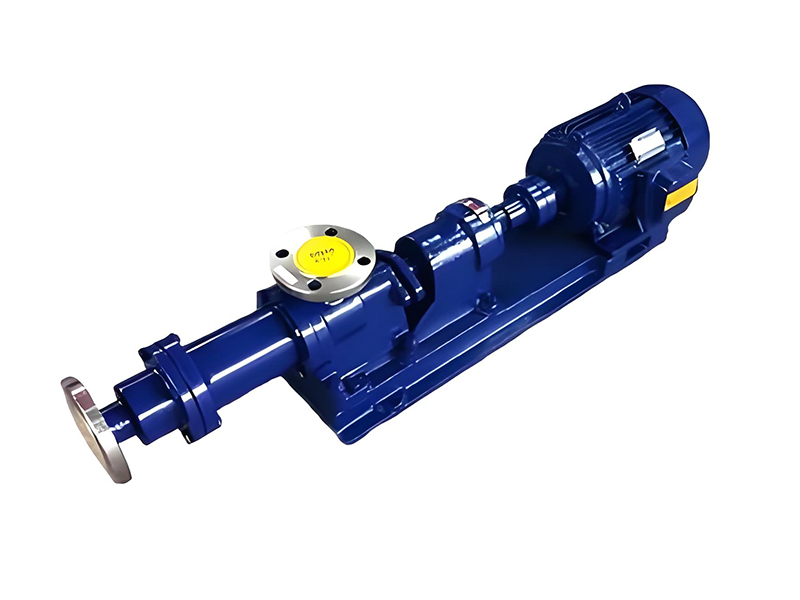
A vertical screw pump is a positive displacement pump in which one or more helical screws rotate within a stator or housing and move fluid in an axial direction from the suction side to the discharge side. The pump is installed with a vertical orientation, typically with the suction immersed in a pit, tank, sump, or well, and the drive motor located at the top.
In geothermal energy applications, vertical screw pumps are commonly used as:
Both designs are categorized as screw pumps and share key characteristics: low pulsation flow, good suction capability, and the ability to handle viscous or multiphase geothermal fluids with solid and gas content.
Overview of Vertical Screw Pump Types Used in Geothermal Energy
| Vertical Progressive Cavity Pump (Single Screw) |
| Single helical rotor turning in a stator forms cavities that progress axially |
| Low-to-medium temperature brines, geothermal water transfer, circulation, reinjection |
| Handles solids and gas, gentle on fluid, good suction lift, stable flow |
| Two intermeshing screws rotating in a close-tolerance casing |
| High-pressure geothermal brine transfer, multiphase fluids, high-capacity circulation |
| High pressure capability, low pulsation, operates over wide viscosity range |
| Vertical Triple-Screw Pump |
| One driving screw and two driven screws in a tight housing |
| Clean geothermal condensate, lubrication and sealing systems, auxiliary services |
| High efficiency with clean fluids, compact design, low noise |
2. Geothermal Energy Basics and Pumping Needs
Geothermal energy systems exploit heat stored in the earth’s crust. Depending on the temperature and geology, geothermal resources are used for power generation, district heating, industrial processes, or combined heat and power (CHP). Vertical screw pumps support many of these applications by maintaining reliable circulation of geothermal fluids.
2.1 Types of Geothermal Systems
Geothermal energy projects are typically classified by temperature range:
Low-temperature geothermal (< 90–100 °C): used for direct-use heating, greenhouses, aquaculture, and low-temperature district heating networks.
2.2 Pumping Requirements in Geothermal Plants
Across these temperature ranges, geothermal fluid handling systems must address:
Geothermal fluids often contain dissolved minerals, gases (CO2, H2S), and suspended solids that can cause scaling, corrosion, and clogging. Vertical screw pumps are preferred in many cases because their positive displacement design and robust construction can handle these challenging conditions better than some centrifugal alternatives.
Typical Pumping Challenges in Geothermal Energy Systems
| Fluid temperatures from ambient up to over 200 °C |
| Requires heat-resistant materials, seals, and elastomers |
| Silica, carbonate, and other mineral precipitates |
| Favors pumps tolerant of fouling and variable clearances |
| Presence of chlorides, sulfides, and dissolved gases |
| Drives selection of stainless steel or special alloys |
| Sand, silt, and formation particles from the reservoir |
| Requires erosion-resistant design and geometry tolerant of solids |
| Free gas and dissolved gases released during pressure drop |
| Positive displacement pumps can handle multiphase mixtures better |
| Seasonal and load-dependent changes in heat or power demand |
| Favors pumps with broad turndown ratio and efficient speed control |
3. Working Principle of Vertical Screw Pumps
Vertical screw pumps operate on the principle of positive displacement. They trap fixed volumes of geothermal fluid and move it continuously along the axis of rotation. The vertical orientation provides a compact footprint and allows the pump to be installed in pits, wells, or sumps with the motor safely located above the fluid level.
3.1 Vertical Progressive Cavity (Single-Screw) Pumps
In vertical progressive cavity pumps used in geothermal applications:
3.2 Vertical Multi-Screw Pumps
Vertical twin-screw and triple-screw pumps use multiple meshing screws:
3.3 Vertical Arrangement and Submergence
The vertical arrangement benefits geothermal installations by:
Key Operating Characteristics of Vertical Screw Pumps
| Relevance to Geothermal Applications |
|---|
| Fixed volume per revolution, flow proportional to speed |
| Stable flow for geothermal heat exchangers and reinjection control |
| Continuous, smooth discharge flow |
| Protects geothermal piping and equipment from pressure surges |
| Can evacuate air and start pumping without special priming |
| Useful for geothermal systems with intermittent operation or gas entrainment |
| Can operate with low Net Positive Suction Head (NPSH) conditions |
| Helps in geothermal sumps and low-pressure sections of the circuit |
| Flow can be precisely controlled with VFDs |
| Allows matching geothermal production to demand and reservoir management constraints |
4. Key Benefits in Geothermal Applications
Vertical screw pumps offer a combination of features that align well with the requirements of geothermal energy plants. In many geothermal applications, these pumps improve reliability, efficiency, and process control.
4.1 Handling of Challenging Geothermal Fluids
Geothermal brines and waters are often aggressive and contaminated. Vertical screw pumps can handle:
4.2 Stable Flow for Heat Exchange and Power Generation
Geothermal power plants and district heating systems require consistent flow to maintain stable temperatures and pressures. Vertical screw pumps provide:
4.3 Energy Efficiency and Operating Cost Reduction
Because vertical screw pumps are positive displacement machines with efficient hydraulic design, they can offer:
4.4 Compact, Vertical Design
Vertical orientation is advantageous in geothermal plants where space is limited:
Main Advantages of Vertical Screw Pumps for Geothermal Energy
| Handles solids, gases, and variable conditions without losing prime |
| Minimizes geothermal plant downtime and unplanned outages |
| Wide turndown ratio via speed control, stable at low flow |
| Adapts to seasonal heat demand and reservoir management requirements |
| Rugged construction, vertical bearings, and stiff shaft design |
| Withstands high temperature and pressure in geothermal service |
| Vertical arrangement, sump or well installation, minimal suction piping |
| Simplifies layout in compact geothermal power stations and heating plants |
| Energy-efficient operation and extended service life with correct materials |
| Lowers lifecycle cost of geothermal pumping systems |
5. Typical Geothermal Applications of Vertical Screw Pumps
Vertical screw pumps are applied across the entire geothermal value chain, from resource extraction to heat delivery and reinjection. The following subsections describe common use cases.
5.1 Production Well Pumping
In some geothermal fields, especially low- to medium-temperature reservoirs, the natural artesian pressure is insufficient to lift geothermal fluids to the surface at the required flow rate. Vertical screw pumps can be installed at surface level in:
The pumps then transfer geothermal water to heat exchangers, power plant modules, or distribution networks.
5.2 Geothermal Brine Circulation
In binary cycle geothermal power plants and direct-use heating installations, vertical screw pumps can circulate:
The positive displacement nature ensures that designed flow rates are maintained irrespective of downstream system pressure variations within the pump’s pressure capability.
5.3 Reinjection Well Pumping
Environmental and reservoir management considerations require that cooled geothermal brine is re-injected back into the subsurface. Vertical screw pumps are well-suited for reinjection because they can:
5.4 District Heating Networks
Geothermal district heating networks distribute hot water through insulated pipelines to residential, commercial, and industrial consumers. Vertical screw pumps in these systems perform:
The stable flow improves temperature control at consumer interfaces and reduces the risk of hydraulic shocks in distribution piping.
5.5 Auxiliary and Support Systems
In addition to main production and reinjection duties, vertical screw pumps are used in geothermal plants for:
Typical Roles of Vertical Screw Pumps in Geothermal Energy Projects
| Geothermal System Component |
|---|
| Preferred Screw Pump Type |
|---|
| Lift geothermal fluid to plant inlet |
| Vertical progressive cavity or twin-screw |
| Good suction, solids handling, moderate head |
| Circulate geothermal brine or heat-transfer fluid |
| Vertical progressive cavity |
| Stable flow, low pulsation, variable speed |
| Inject cooled brine into reservoir |
| Vertical twin-screw or robust progressive cavity |
| High discharge pressure, solids and gas tolerance |
| Primary or booster circulation |
| Vertical progressive cavity |
| Energy efficiency, low noise, flow controllability |
| Injection of scale inhibitors and chemicals |
| Accurate metering, corrosion-resistant materials |
| Waste and Sludge Handling |
| Transfer of scale, sludge, and waste fluids |
| Vertical progressive cavity |
| High solids handling, abrasion resistance |
6. Design and Selection Considerations
Correct design and selection of vertical screw pumps for geothermal energy applications is critical to performance and lifetime. Several interrelated factors must be considered during specification and system integration.
6.1 Hydraulic Sizing
Key hydraulic parameters include:
6.2 Fluid Properties
Geothermal fluid properties significantly influence pump design:
Chemical composition, including chlorides, sulfides, CO2, and pH.
6.3 Mechanical Arrangement
Important mechanical design aspects include:
6.4 Control and Integration
To integrate vertical screw pumps into geothermal control systems:
Primary Selection Criteria for Vertical Screw Pumps in Geothermal Service
| Typical Geothermal Requirements |
|---|
| Flow, head, NPSH, efficiency at operating points |
| Stable operation across well output and load variations |
| Materials of Construction |
| Metals, elastomers, coatings |
| Resistance to corrosion, scaling, and abrasion |
| Maximum continuous and transient temperature |
| Compatible with geothermal reservoir and process temperatures |
| Clearances, rotor/stator geometry, casing design |
| Suitable for sand and scale content in brine |
| Available footprint, pit depth, access for maintenance |
| Fits existing or planned geothermal plant layout |
| VFD capability, sensor integration, control strategy |
| Aligns with plant SCADA and reservoir management systems |
7. Material and Construction Options
Proper material selection is essential in geothermal energy because geothermal brines are often chemically aggressive and scaling-prone. Vertical screw pumps are available in a wide range of materials tailored to specific geothermal fluid chemistries.
7.1 Metals for Pump Casings and Rotors
Common choices include:
7.2 Stator and Elastomer Materials
For progressive cavity vertical screw pumps, stator material is critical:
7.3 Coatings and Surface Treatments
Coatings can extend vertical screw pump service life in geothermal service:
Typical Material Combinations for Vertical Screw Pumps in Geothermal Applications
| Geothermal Fluid Condition |
|---|
| Recommended Casing/Rotors |
|---|
| Moderate temperature, low salinity, low gas content |
| Carbon steel or 304 stainless steel |
| NBR stator, standard mechanical seals |
| High chloride brine, medium temperature |
| 316 or duplex stainless steel |
| HNBR or FKM elastomers, corrosion-resistant seal faces |
| High temperature, high salinity, scaling tendency |
| Duplex stainless or nickel-based alloys with coated surfaces |
| High-temperature elastomers, advanced sealing systems |
| Highly corrosive with H2S and CO2 |
| Special alloys, corrosion-resistant coatings |
| Chemically resistant elastomers, gas-tight seals |
| Slurry-like fluids with high solids content |
| Abrasion-resistant alloys or coated steel |
| Wear-resistant elastomers, reinforced stator designs |
8. Typical Performance Specifications
Vertical screw pumps for geothermal energy are available in a wide envelope of sizes and capacities. The exact specifications depend on the particular design, but typical ranges can be summarized to aid conceptual design and early project planning.
8.1 General Performance Ranges
While values vary, many vertical screw pumps used in geothermal service fall within the approximate ranges shown below.
Typical Performance Ranges for Vertical Screw Pumps in Geothermal Applications
| Progressive Cavity (Single Screw) |
|---|
| From a few L/h up to ~400 m3/h or more |
| From ~5 m3/h up to over 1000 m3/h, depending on design |
| Differential Pressure / Head |
| Up to 48 bar or more in multi-stage designs |
| Up to 80 bar or more for high-pressure brine transfer |
| Typically -10 to 180 °C with suitable elastomers |
| Typically -10 to 250 °C with appropriate alloys |
| From water-like to highly viscous slurries |
| From low to moderate viscosity fluids, including some multiphase mixtures |
| Up to high percentages of solids, depending on design |
| Typically low to moderate solids; more limited than progressive cavity |
8.2 Example Specification Table for a Geothermal Application
The following is an example of how a vertical screw pump might be specified for a medium-temperature geothermal heating project. Values are illustrative and must be adapted to project-specific conditions.
Example Vertical Progressive Cavity Pump Specification for Geothermal Heating
| Notes for Geothermal Designers |
|---|
| Geothermal brine, 95 °C, 15 g/L dissolved solids |
| Requires corrosion-resistant construction and suitable elastomers |
| Based on required heat load and temperature drop |
| 60 m (approximately 6 bar) |
| Includes static lift, friction, and distribution network pressure |
| Operating Temperature Range |
| Accounts for seasonal variations and start-up conditions |
| < 0.5 % by weight, primarily fine sand |
| Requires abrasion-resistant rotor and stator elastomer |
| Material of Casing / Rotor |
| Provides adequate corrosion resistance at moderate salinity |
| HNBR (high-temperature nitrile) |
| Suitable for prolonged exposure to ~100 °C brine |
| Sized considering pump efficiency and safety margin |
| Vertical in concrete sump, immersion length 3.5 m |
| Designed to maintain sufficient submergence and NPSH |
| Speed control via VFD based on outlet temperature |
| Adjusts flow to maintain district heating supply temperature |
9. Comparison with Other Pump Types in Geothermal Service
When designing geothermal systems, engineers often compare vertical screw pumps to other common pump types, such as centrifugal pumps, vertical turbine pumps, and submersible pumps. Each technology has advantages depending on the specific application.
9.1 Vertical Screw vs. Centrifugal Pumps
Geothermal plants often use centrifugal pumps for large flows at moderate heads. However, vertical screw pumps can be preferable when:
9.2 Vertical Screw vs. Vertical Turbine and Submersible Pumps
Vertical turbine and submersible pumps are widely used in geothermal production wells. Vertical screw pumps are more typically used at the surface or in sumps rather than deep-well immersion, but they compete with these technologies for certain shallow well or surface collection applications.
Vertical turbine pumps provide high flows and heads with clean water-like fluids. Where geothermal brine is more contaminated or where smooth positive displacement flow is desired, vertical screw pumps have an advantage.
Comparison of Pump Technologies for Geothermal Applications
| Positive displacement, solids and gas handling, smooth flow, good at variable speed |
| Typically higher initial cost per unit of flow than standard centrifugal, more complex internals |
| Brine circulation, reinjection, sumps, sludge handling, district heating loops |
| Simple design, low cost, high flow capacity at moderate heads |
| Sensitive to gas and solids, efficiency drops at off-design conditions |
| Cooling water circulation, clean condensate transfer, some geothermal production |
| High head, submerged impellers, small surface footprint |
| Less tolerant of solids and gas, more complex well installation |
| Deep geothermal production wells with relatively clean fluids |
| Downhole installation, long lift capability, compact surface layout |
| Challenging maintenance, sensitive to solids and scaling |
| High-depth geothermal wells, especially where wellhead pressure is low |
| Diaphragm / Metering Pump |
| Precise low-flow dosing, high pressure capability |
| Low flow only, not for bulk geothermal brine transfer |
| Chemical dosing, anti-scalant and inhibitor injection |
10. Installation and System Layout in Geothermal Plants
The way vertical screw pumps are installed in geothermal systems affects performance, reliability, and ease of maintenance. Several typical layouts are used in geothermal energy applications.
10.1 Sump and Pit Installation
In many geothermal heating plants and binary power stations:
10.2 Wellhead and Gathering System Integration
In multi-well geothermal fields:
10.3 Reinjection Station Layout
In reinjection stations:
Common Installation Features for Vertical Screw Pumps in Geothermal Plants
| Top-Mounted Motor and Drive |
| Motor is installed above the fluid level on a baseplate |
| Protects electrical components from hot, corrosive atmosphere and splashing |
| Pumping stages are located below fluid surface |
| Improved NPSH conditions and self-priming capability |
| Guide Rails and Lifting Devices |
| Mechanical systems to remove and reinstall pumps |
| Facilitates maintenance without complete disassembly of piping |
| Choice of discharge orientation |
| Flexibility in piping layout within geothermal plant constraints |
| Walkways and platforms for operators |
| Safe inspection, operation, and servicing of vertical screw pumps |
11. Operation, Control, and Automation
Efficient operation of vertical screw pumps in geothermal energy applications requires careful attention to control strategies. Integrating pump control with overall plant automation helps maximize availability and minimize energy use.
11.1 Variable Speed Operation
Because vertical screw pumps are positive displacement, their flow rate is directly proportional to rotational speed. This makes them ideal candidates for:
11.2 Process Control Integration
In modern geothermal plants, vertical screw pumps are integrated into supervisory control and data acquisition (SCADA) systems. Typical control parameters include:
11.3 Protection and Monitoring
To protect vertical screw pumps and maximize lifetime in geothermal service, monitoring and protection functions typically include:
Key Control and Automation Features for Vertical Screw Pumps in Geothermal Plants
| Adjusts pump speed to maintain target variable |
| Flow control in district heating, reinjection, and brine circulation |
| Modulates speed based on discharge pressure feedback |
| Maintains stable pressure to heat exchangers and distribution pipelines |
| Starts/stops pump based on sump level |
| Prevents dry run and overflow in geothermal collection pits |
| Monitors fluid and bearing temperatures |
| Ensures operation within material and design limits |
| Tracks vibration, power consumption, and other indicators |
| Enables predictive maintenance in high-value geothermal assets |
12. Maintenance, Reliability, and Lifecycle Aspects
Long-term reliability is a key priority in geothermal energy projects, where downtime directly affects power or heat production. Vertical screw pumps are designed for robust operation, but they still require proper maintenance practices.
12.1 Wear and Service Intervals
Wear mechanisms in geothermal service may include:
Appropriate material selection, filtration, and operating procedures can significantly extend service intervals for vertical screw pumps.
12.2 Routine Maintenance Activities
Typical maintenance tasks include:
12.3 Reliability Strategies
To maximize reliability of vertical screw pumps in geothermal applications, designers and operators often implement:
Maintenance and Reliability Considerations for Vertical Screw Pumps in Geothermal Service
| Use erosion-resistant materials, optimize filtration, limit pump speed |
| Reduced wear of screws, rotors, and stators |
| Select corrosion-resistant alloys, apply inhibitors, control pH |
| Extended pump lifetime in corrosive geothermal brines |
| Choose suitable elastomer, avoid over-temperature, limit chemical attack |
| Longer intervals between stator and seal replacement |
| Use sensors for vibration, power, and temperature trending |
| Early warning of developing issues, enabling planned maintenance |
| Regular flushing and cleaning to remove scale and deposits |
| Stable hydraulic conditions and reduced mechanical stress |
13. Emerging Trends in Geothermal Use of Vertical Screw Pumps
As geothermal energy technologies evolve, so do the roles and designs of vertical screw pumps. Several trends are shaping the future of these pumps in geothermal applications.
13.1 Enhanced Geothermal Systems (EGS)
Enhanced Geothermal Systems involve creating permeability in hot, dry rock and circulating water to extract heat. Vertical screw pumps are being evaluated and applied for:
13.2 Hybrid and Cascaded Energy Uses
Geothermal plants are increasingly combined with other renewable technologies and cascaded heat uses. Vertical screw pumps support these integrated systems by moving geothermal fluids between:
Different temperature stages in cascaded use, such as power, industrial process, and greenhouse heating.
13.3 Digitalization and Smart Pumping
Digital monitoring, data analytics, and smart control strategies are being applied to vertical screw pumps in geothermal plants to:
Future-Oriented Trends for Vertical Screw Pumps in Geothermal Energy
| Impact on Pump Design and Use |
|---|
| Enhanced Geothermal Systems |
| Circulation in engineered reservoirs with high temperature gradients |
| Needs high-pressure, high-temperature-capable vertical screw pumps |
| Cascaded Heat Utilization |
| Multi-stage use of geothermal heat for power and direct use |
| Demands flexible pumps serving multiple loops at different conditions |
| Advanced sensing and analytics for pump performance |
| Encourages inclusion of smart sensors and connectivity in pump design |
| Development of new alloys, elastomers, and coatings |
| Leads to longer pump lifetimes and operation in more extreme brine chemistries |
| Focus on reducing auxiliary power in geothermal plants |
| Promotes high-efficiency, variable-speed vertical screw pump systems |
14. Conclusion
Vertical screw pumps have become an important technology in geothermal energy applications because they combine positive displacement performance with a compact, vertically oriented design. By providing smooth, controllable flow of geothermal fluids under challenging conditions of temperature, pressure, solids content, and gas entrainment, these pumps support reliable and efficient operation of geothermal power plants, district heating systems, and direct-use heating projects.
Proper selection of vertical screw pump type, materials, and control strategy is essential to match the specific characteristics of each geothermal reservoir and project. When integrated thoughtfully into geothermal system design, vertical screw pumps can reduce lifecycle costs, improve thermal performance, and enhance the overall sustainability of geothermal energy production.
```






 Phone
Phone
Comment
(0)